









Top 5 Mistakes Founders Make in Custom Software Development
 Feb 23,2026
  By Rahul Pandit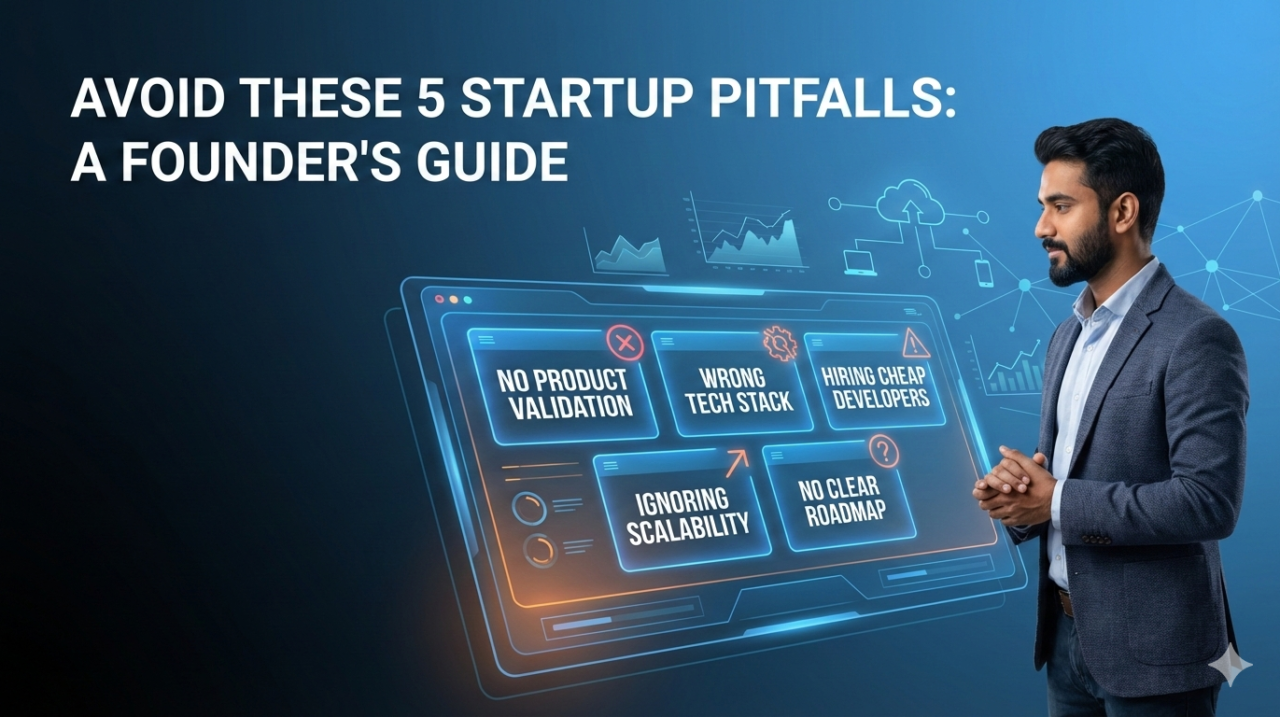
Custom software development can define the success or failure of a startup. Yet many founders unknowingly make critical mistakes that lead to delays, budget overruns, and scalability issues. In this blog, we explore the five most common mistakes and how to avoid them strategically.
Introduction: The Costly Reality Most Founders Learn Too Late
Every founder dreams of building the next big product.
The idea feels powerful.
The market opportunity looks huge.
The investors are interested.
And then… development starts.
Six months later, the budget is exhausted. The product is delayed. The team is frustrated. And users are still waiting.
Custom software development is not just about writing code — it’s about building a scalable digital asset that can survive growth, competition, and market shifts.
Yet, many startups and enterprises repeat the same avoidable mistakes.
Let’s break down the top 5 custom software development mistakes founders make — and how to avoid them.
Why This Matters More Than Ever
Nearly 70% of software projects either fail, go over budget, or miss deadlines due to poor planning, unclear requirements, or misaligned execution.
In today’s world of AI-powered SaaS, cloud-native apps, and fast-moving markets, execution mistakes are expensive.
The difference between a scalable SaaS product and a struggling app often lies in early technical decisions.
Mistake #1: Starting Development Without Clear Product Validation
The Problem
Many founders jump directly into development because:
- “We’re confident about the idea.”
- “The competitor already exists.”
- “We don’t want to waste time.”
But building without validation leads to:
- Feature bloat
- Misaligned user experience
- Poor retention
- Burned capital
The Smart Approach
Before writing code:
- Validate problem-solution fit.
- Define a focused MVP (Minimum Viable Product).
- Conduct user interviews.
- Build wireframes and prototypes.
- Identify measurable success metrics.
Modern startups use lean product development frameworks combined with scalable technologies like:
- Flutter or React for rapid MVP
- FastAPI or Node.js for backend development
- AWS or other cloud platforms for flexible infrastructure
If you’re planning to build a new digital product, investing in structured validation before development can save months of rework.
Mistake #2: Choosing the Wrong Technology Stack
The Problem
Many founders select technologies based on:
- Developer availability
- Trends
- Budget shortcuts
- Friend recommendations
Instead of asking:
- Will this scale to 100K users?
- Does it support AI integration?
- Can we expand features easily?
- Is it cloud-ready?
Poor stack decisions lead to:
- Scalability bottlenecks
- Performance issues
- Security risks
- Expensive migrations later
Example
Imagine building a SaaS platform without scalable architecture. Once traffic grows, the system collapses under load.
Instead, modern scalable stacks often include:
- Frontend: React.js / Next.js / Flutter
- Backend: FastAPI / Django / Node.js
- Database: PostgreSQL / MongoDB
- Cloud: AWS (EC2, RDS, S3, Lambda)
- AI Layer: LLM integrations and automation APIs
- DevOps: Docker and CI/CD pipelines
Technology should be chosen based on future scalability, not current convenience.
If you’re unsure about the right architecture, consulting experienced product engineering teams before locking decisions can prevent expensive rebuilds.
Mistake #3: Hiring Based on Cost Instead of Capability
The Problem
Budget matters — especially for startups.
But choosing the cheapest development option often results in:
- Poor code quality
- No documentation
- Security vulnerabilities
- Zero scalability planning
- Frequent rewrites
Custom software is not an expense — it’s a long-term digital asset.
What Founders Should Evaluate
- Experience in similar domain
- System architecture understanding
- AI & automation exposure
- DevOps practices
- Documentation standards
- Post-deployment support
A strong development team doesn’t just “build what you ask.”
They question assumptions, optimize processes, and think long-term.
Saving 30% upfront can cost 200% later in fixes and restructuring.
Mistake #4: Ignoring Scalability & Future Growth
The Problem
Many founders build for today.
But software must be built for tomorrow.
Questions often ignored:
- What happens when user traffic increases 50x?
- Can the database handle high concurrency?
- Is the architecture cloud-native?
- Does it support AI and automation integration?
Real-World Scenario
A startup launched without proper load balancing or caching. After a marketing push, the system crashed under user load.
Scalable development includes:
- Microservices or modular architecture
- Load balancing
- Caching layers (Redis)
- Database indexing
- Horizontal scaling
- CDN integration
- Monitoring tools
Planning for growth doesn’t mean overbuilding — it means building intelligently.
Mistake #5: No Clear Product Roadmap & Agile Execution
The Problem
Many projects fail because:
- Scope keeps changing
- Features are added randomly
- No sprint structure
- No release cycles
- No KPI tracking
This leads to chaos and delayed launches.
The Right Development Approach
A structured agile model includes:
Step 1: Discovery Phase
- Business goals alignment
- Technical feasibility study
- Architecture planning
Step 2: UI/UX Design
- Wireframes
- User journey mapping
- Interactive prototypes
Step 3: MVP Development
- Sprint-based releases
- Continuous feedback
- QA testing
Step 4: Deployment & DevOps
- CI/CD pipeline
- Cloud configuration
- Security setup
Step 5: Optimization & Scaling
- Analytics integration
- AI implementation
- Performance tuning
If you’re planning to build a scalable SaaS, web, or AI-driven application, having a structured product roadmap is critical.
You can always Schedule a Free Consultation to explore what your roadmap should look like.
Benefits of Avoiding These Mistakes
When founders avoid these 5 mistakes, they gain:
- Faster time to market
- Lower long-term costs
- Better user retention
- Higher investor confidence
- Scalable product architecture
- Easier AI & automation integration
Software becomes an asset — not a liability.
Future Trends Founders Must Prepare For
The next wave of digital products will be:
- AI-powered by default
- SaaS-based subscription models
- API-first ecosystems
- Automation-heavy workflows
- Data-driven decision engines
- Cloud-native infrastructure
Custom software is no longer static.
It evolves.
Founders who build with scalability and automation in mind today will dominate tomorrow.
If you’re planning to build something ambitious and want clarity before investing heavily, you can Talk to Our Experts or Get a Project Estimation to understand the right approach for your idea.
Conclusion: Build Smart. Scale Strong.
Custom software development is not just about coding.
It’s about:
- Strategy
- Architecture
- Scalability
- Market alignment
- Long-term vision
The top 5 mistakes discussed above are avoidable — but only with the right planning and execution model.
Whether you’re building a SaaS platform, AI product, enterprise dashboard, or mobile application, structured product engineering makes the difference.
Build smart. Scale strong. Win long-term.
Frequently Asked Questions (FAQs)
1. What are common custom software development mistakes?
Common mistakes include skipping product validation, choosing the wrong technology stack, hiring based only on cost, ignoring scalability, and lacking a structured roadmap.
2. How can startups avoid software development failure?
Startups can avoid failure by validating their idea, defining a clear MVP, selecting scalable architecture, working with experienced developers, and following an agile process.
3. Why is choosing the right tech stack important?
The right technology stack ensures performance, scalability, security, and easier integration of AI and automation features in the future.
4. How much does custom software development cost?
Costs vary depending on complexity, features, technology stack, and scalability requirements. A structured discovery phase helps estimate accurate budgets.
5. When should founders consult a product engineering team?
Founders should consult experts during the idea validation or planning phase to avoid costly architectural mistakes and ensure long-term scalability.


 Apr 02, 2026

